Welcome to Our Company

 English
 Spanish
 French
 German
 Italian
 Chinese (Simplified)
 Japanese
 Korean
 Arabic
 Portuguese

Call Us
Free Support : 08071630333
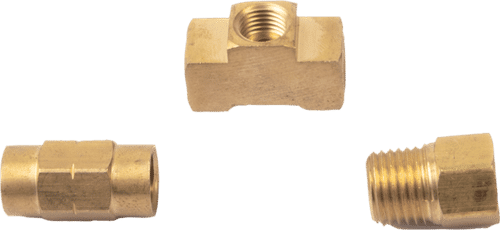
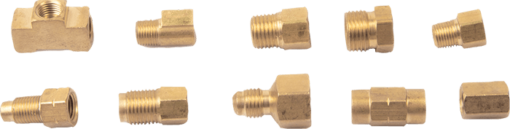
Inverted Flare Fittings
30 INR/Piece
Product Details:
- Tensile Strength 345 MPa (Brass), 440 MPa (Steel)
- Flexibility Rigid
- Yield Strength 210 MPa (Brass), 370 MPa (Steel)
- Diameter 6 mm - 25 mm
- Connection Type Threaded flare
- Thread Type NPT / UNF / BSP
- Tolerance 0.05 mm
- Click to view more
X
Inverted Flare Fittings Price And Quantity
- 1000 Piece
- 30 INR/Piece
Inverted Flare Fittings Product Specifications
- 0.05 mm
- NPT / UNF / BSP
- Electroplated
- Hydraulic tubing, Brake lines, Fuel lines
- Threaded flare
- 6 mm - 25 mm
- 6 mm - 25 mm
- As per tube diameter
- Gold (Brass) / Silver (Steel)
- Up to 6000 PSI
- 18 mm - 65 mm
- SAE J512, ISO 8434-2
- Metal-to-metal
- Threaded, Flare
- Fluid & gas lines, Automotive, Refrigeration
- 1.5 mm - 3 mm
- -40C to +150C
- Rigid
- Brass / Steel
- 345 MPa (Brass), 440 MPa (Steel)
- Zinc plated / Nickel plated
- Cylindrical
- Hexagonal body with flared end
- 210 MPa (Brass), 370 MPa (Steel)
- CW614N / ASTM B16 (Brass), Grade 1018 (Steel)
- Inverted Flare Fittings
- Requires standard wrench
- High (with plated surface)
- Available
- Yes, multiple assembly/disassembly cycles
Inverted Flare Fittings Trade Information
- Cash Advance (CA)
- Yes
- All India
Product Description
Generally made in accodance with SAEJ512 and designed for use with copper, brass, aluminum and welded steel hydralic ubing and flared like S.A.E. 45 degree fittings.
A long nut is useful for excessive vibration. To make connection, place the nut over the tubing, threaded end toward the tubing end to be flared. Flare tubing to create a 45 degree flare. The tube flare is clamped between nut and flare seat of body when screwed together.
When assembly is tightened with a wrench, a leak-proof metal-to-metal joint is created.
The Inverted Flare Fittings mainly used in fuel and oil lines, automative brake, LP and Natural Gas Connections.
Superior Corrosion Resistance and Durability
These inverted flare fittings are treated with zinc or nickel electroplating to ensure exceptional corrosion resistance, extending longevity even in harsh environments. Their robust brass or steel construction guarantees reliable performance, meeting stringent SAE and ISO standards. Ideal for industries requiring consistent durability.
Versatile Applications in Fluid & Gas Systems
Designed for hydraulic tubing, brake lines, and fuel lines, these fittings are suitable across automotive, refrigeration, and industrial sectors. Their flexibility in diameter and threading options enables seamless integration with various system requirements, supporting pressures up to 6000 PSI and wide temperature ranges.
Precision Engineering and Reusability
Manufactured with exacting tolerances (0.05 mm) and rigid section shapes, these fittings ensure leak-free, metal-to-metal sealing. Their reusable nature supports multiple assembly and disassembly cycles, enhancing value for maintenance operations and reducing replacement costs.
FAQ's of Inverted Flare Fittings:
Q: How should inverted flare fittings with high corrosion resistance be installed?
A: Installation requires a standard wrench to secure the threaded flare connection. For optimum sealing and repeated use, ensure proper alignment and sufficient torque as per application specifications.Q: What materials are available for these fittings, and do they offer lead-free options?
A: These fittings are produced from brass (CW614N / ASTM B16) or steel (Grade 1018), with a lead-free variant available. Both materials are electroplated for enhanced corrosion resistance.Q: When is it recommended to use these fittings in automotive or industrial applications?
A: They are ideal for fluid and gas lines, hydraulic tubing, brake lines, and fuel lines when high corrosion resistance, reliable pressure ratings (up to 6000 PSI), and reusability are required.Q: Where are these inverted flare fittings typically applied?
A: Common applications include automotive systems, refrigeration units, industrial hydraulic setups, and any environment demanding robust, leak-proof connections for fluid or gas transfer.Q: What is the process for reusing these fittings across multiple assembly cycles?
A: Thanks to their durable material and plated surface, these fittings can be disassembled and reassembled several times without compromising metal-to-metal joint integrity. Clean threads and surfaces before each reuse for optimal sealing.Q: How does the plated surface treatment benefit the fittings?
A: Zinc or nickel electroplating safeguards the fittings against corrosion, extending their operational lifespan and ensuring dependable performance in challenging environmental conditions.Q: What are the main benefits of choosing these fittings for hydraulic and fuel systems?
A: They offer precise sealing, reliable pressure tolerance, robust corrosion resistance, and ease of installation. Their reusable design leads to reduced maintenance costs and greater flexibility in assembly and repair.Tell us about your requirement

Price:
Quantity
Select Unit
- 50
- 100
- 200
- 250
- 500
- 1000+
Additional detail
Mobile number
Email

Other Products in 'Brass Flare Fittings' category

 Send Inquiry
 Send SMS
TURN AND FORGE METAL TEC
GST : 24AALFT0532B2ZO
GST : 24AALFT0532B2ZO

- PLOT No 4728, G I D C PHASE 3, DARED BYEPASS,Jamnagar - 361004, Gujarat, India
- Mr. Dilip (Proprietor)
- Mobile : 08071630333
- Phone : 08071630333
- rathoddilipl@gmail.com
 Send Inquiry
RATHOD ENTERPRISE
All Rights Reserved.(Terms of Use)
Developed and Managed by Infocom Network Private Limited.
Developed and Managed by Infocom Network Private Limited.

